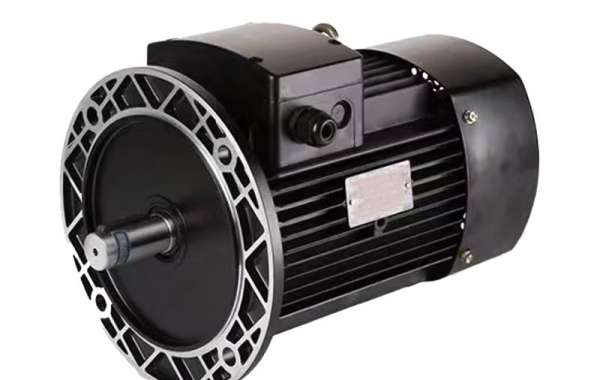
A DC motor is an electromechanical device that converts direct current electrical energy into rotational mechanical energy. This conversion process relies on the fundamental interaction between magnetic fields and electric current, a principle foundational to its operation. At the heart of any basic DC motor lies a stationary structure called the stator, which generates a fixed magnetic field. Traditionally, this field is produced by permanent magnets or electromagnetic windings known as field windings. Within this stationary field rotates the armature, the central moving component of the DC motor. The armature is a cylinder built from laminated iron sheets and slotted to hold coils of wire. When an electric current flows through these armature windings, it generates its own magnetic field. The interaction between the magnetic field of the armature and the fixed field of the stator produces a torque, causing the armature to spin.
However, continuous rotation in a single direction requires a critical component called the commutator. This is a mechanical rotary switch mounted on the armature shaft. It consists of multiple copper segments insulated from one another. Pressing against the commutator are carbon or graphite blocks known as brushes, which conduct current from the stationary power supply to the rotating armature. As the armature turns, the commutator systematically reverses the direction of current flow in the armature coils at the precise moment needed. This reversal ensures that the magnetic torque acting on the armature remains consistently in one rotational direction. Without this commutation process, the DC motor would only oscillate back and forth rather than achieve sustained rotation. The reliable function of the commutator and brush assembly is therefore central to the operation of a traditional brushed DC motor.
The performance characteristics of a given DC motor are shaped by its internal design parameters. The strength of the magnetic field, the number of turns in the armature windings, and the physical dimensions of the motor all influence its speed, torque, and efficiency. A significant advantage of a DC motor is its straightforward speed control. Since the rotational speed is approximately proportional to the applied voltage, adjusting the supply voltage allows for smooth and wide-ranging speed variation. Furthermore, the torque produced by a DC motor is generally proportional to the armature current. This makes it suitable for applications requiring good starting torque or precise control over force. From this foundational principle of converting current and magnetism into motion, the DC motor has evolved into a diverse family of machines serving countless roles in both industry and everyday products.