
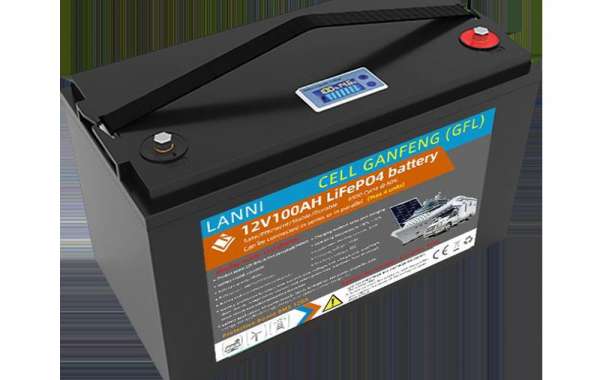
The term "lithium battery" encompasses a family of chemistries, each with distinct attributes tailored for specific applications. The most widespread category is lithium-ion batteries, which themselves include several cathode-based variants. A lithium cobalt oxide battery offers high energy density, making it prevalent in smartphones and laptops, but it has specific limitations regarding thermal stability and cycle life. For power tools and electric vehicles, formulations like lithium nickel manganese cobalt oxide or lithium nickel cobalt aluminum oxide provide a balance of energy, power, and longevity. In contrast, a lithium iron phosphate battery sacrifices some energy density for enhanced thermal safety, a longer cycle life, and tolerance to full charge states, making it a growing choice for energy storage systems and certain electric vehicles.
Beyond these liquid electrolyte-based lithium-ion cells, other structures exist. The lithium polymer battery represents a significant design evolution. Instead of a liquid electrolyte, it uses a solid polymer electrolyte or a gel. This allows the lithium battery to be constructed in a flexible, thin, and lightweight pouch format, enabling the sleek designs of modern tablets and drones. While early lithium polymer batteries had lower conductivity, advancements have improved their performance. Another important distinction is between rechargeable lithium-ion/polymer systems and primary, or non-rechargeable, lithium metal batteries. These primary cells use lithium metal as the anode and are valued for their very long shelf life and high energy density in applications like medical devices and military equipment, but they are not designed to be recharged.
Selecting the appropriate type of lithium battery requires evaluating a matrix of performance parameters. Energy density, measured in watt-hours per kilogram, indicates how much energy the battery can store for its weight. Power density, in watts per kilogram, reflects its ability to deliver energy quickly, which is crucial for acceleration in EVs. Cycle life defines how many complete charge-discharge sequences the lithium battery can endure before its capacity significantly degrades. Operational temperature range, charge rate capability, and cost are further critical considerations. Ongoing research continually seeks to improve these metrics, exploring new cathode and anode materials like lithium sulfur or solid-state electrolytes that could define the next generation of lithium battery technology, promising greater safety and even higher energy densities.