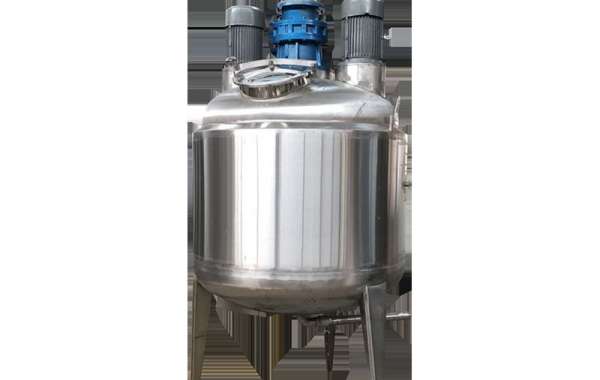
The application of the dispersed emulsification tank is vast, underpinning the production of countless everyday products where a stable mixture of oil and water is required. In the food industry, this equipment is essential for creating items like mayonnaise, salad dressings, sauces, and dairy alternatives. For instance, producing a consistent mayonnaise requires a dispersed emulsification tank to forcefully blend oil into a water-based phase containing egg yolk, vinegar, and mustard. The high-shear action in the tank breaks the oil into minuscule droplets that are coated and stabilized by the emulsifiers in the egg yolk, preventing separation. Similarly, non-dairy milks are processed in a dispersed emulsification tank to uniformly disperse oils and protein powders into water, creating a smooth, homogeneous beverage.
In the pharmaceutical and cosmetic sectors, the precision of a dispersed emulsification tank is critical. Lotions, creams, and ointments are all emulsions. A cosmetic cream, for example, requires the uniform dispersion of oily ingredients like waxes and butters into an aqueous phase. The process in the dispersed emulsification tank must achieve a specific droplet size to ensure the final product has the correct feel, absorption rate, and stability on the shelf. In pharmaceuticals, emulsions can be used as drug delivery systems, where the active ingredient is dissolved in the oil or water phase. Here, the droplet size and distribution produced by the dispersed emulsification tank are not just quality attributes but can affect the bioavailability and efficacy of the medication, requiring stringent process validation and control.
Process control within a dispersed emulsification tank is therefore a sophisticated practice. Operators must manage several interdependent variables. The speed and design of the rotor-stator dictate the shear stress applied, directly influencing the mean droplet diameter. Temperature control is vital; too high a temperature can degrade heat-sensitive ingredients or reduce viscosity, affecting droplet breakup, while too low a temperature can cause some fats to solidify. The sequence of addition is also a science; typically, the continuous phase is added first, and the dispersed phase is incorporated slowly under high shear. For complex recipes, a multi-step process might be used in the same dispersed emulsification tank, starting with a coarse pre-mix before applying high shear, and then adding delicate ingredients like fragrances or heat-sensitive vitamins at a final low-shear blending stage. This level of control transforms the dispersed emulsification tank from a simple mixer into a precision reactor, capable of reproducibly manufacturing complex emulsions that meet strict quality standards for safety, performance, and consumer appeal.