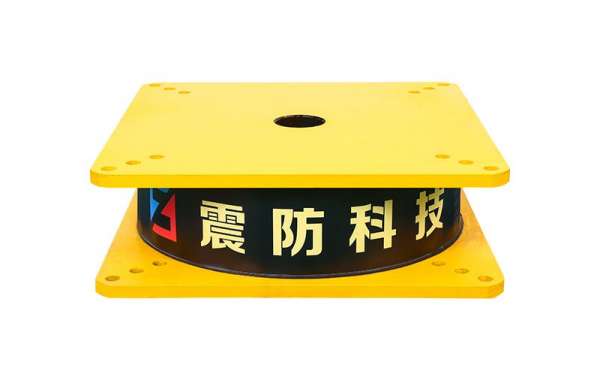
The evolution of seismic isolation bearing technology has led to several distinct designs, each with unique material properties and mechanical behaviors tailored to specific performance requirements. Elastomeric bearings, as previously mentioned, form a primary category. Standard laminated rubber bearings provide flexibility but limited inherent damping. To enhance energy dissipation, high-damping rubber bearings are manufactured using compounds filled with materials like carbon black or oils, giving the rubber itself significant viscous damping properties. This creates an all-in-one seismic isolation bearing that combines restoring force and damping without additional components like a lead core. The design and testing of these rubber compounds are critical to ensuring long-term durability and stable performance over decades.
Sliding isolation systems present a different philosophy. The Friction Pendulum System bearing is a sophisticated example. Its concave sliding surface is typically coated with a low-friction, high-wear-resistant composite material like polytetrafluoroethylene. The articulated slider is often made of stainless steel. The radius of curvature of the sliding surface defines the isolated period of the structure—a longer radius results in a longer period. The friction coefficient at the interface provides the damping. A significant advantage of this seismic isolation bearing is its durability and predictable behavior, even under very large displacements. Recent innovations include multi-spherical FPS bearings or triple pendulum bearings, which have multiple sliding surfaces with different radii and friction coefficients, allowing for adaptive behavior that provides softer initial isolation and increased damping at larger displacements.
Beyond these, hybrid systems combine technologies. For instance, a seismic isolation bearing might pair elastomeric layers with supplementary friction dampers or viscous fluid dampers. These are often used for very large or irregular structures where a single isolation system type is insufficient. The material science behind every seismic isolation bearing is rigorous. Rubber compounds must resist aging, ozone, and creep. Steel plates must have precise flatness and bonding properties. Sliding surfaces must maintain consistent friction characteristics. All materials in a seismic isolation bearing are subjected to extensive prototyping and qualification testing, including large-scale dynamic tests that simulate decades of service life and maximum credible earthquakes. This ensures that when installed, each seismic isolation bearing will perform its vital function reliably, protecting the structural investment and, more importantly, the lives and functions within the building it supports.