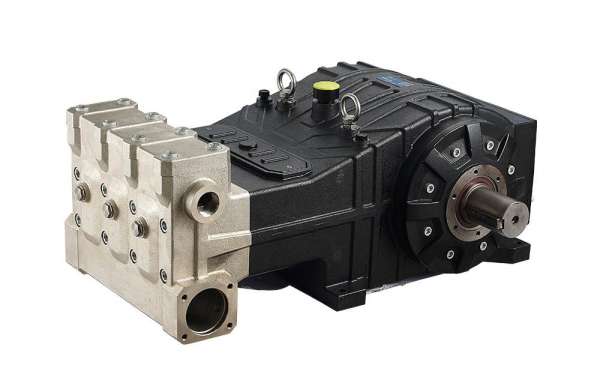
A stainless steel high pressure triplex plunger pump operates on positive displacement principles, where a fixed volume of fluid is captured and then forced into the discharge line. The "triplex" denotes the use of three plungers, reciprocating in sequence, to create a more consistent output flow than pumps with fewer plungers. Encasing this precise mechanism in stainless steel or utilizing the alloy for critical wetted parts adds a dimension of durability and compatibility, allowing the pump to perform effectively with a wider range of fluids while maintaining its internal clearances and strength under pressure.
The core action of this pump begins with the reciprocating motion of its plungers, typically driven by a rotating crankshaft. As a plunger retracts, it creates a vacuum, drawing fluid into its dedicated chamber through an inlet valve. On the forward stroke, the plunger pressurizes the trapped fluid, forcing the inlet valve closed and the discharge valve open, thereby ejecting the fluid at high pressure. In a stainless steel high pressure triplex plunger pump, the chambers, valves, and often the plungers themselves are fabricated from stainless steel to withstand the mechanical stresses and potential chemical interactions of this cyclic process.
The triplex arrangement is fundamental to performance. The three plungers are phased at 120-degree intervals, meaning their intake and discharge strokes overlap. This design results in a discharge flow with notably lower pulsation compared to a single-acting pump. Reduced pulsation translates to less vibration throughout the entire pump system, diminishing strain on piping, connections, and the pump’s own structure. The inherent strength of stainless steel construction helps dampen residual vibration and supports the rigidity required for precise plunger alignment and seal integrity at extreme pressures.
Material choice directly influences efficiency and service life. The smooth, hard surface of stainless steel components minimizes friction and resists scoring from abrasive particles that may be present in certain fluids. For a stainless steel high pressure triplex plunger pump, this preserves volumetric efficiency—the measure of how much fluid is actually delivered versus theoretical capacity. Maintaining tight clearances between plungers and liners or within valves is essential for preventing internal leakage, which erodes pressure and flow. Stainless steel’s resistance to deformation under load helps sustain these clearances.
Cooling and lubrication in these pumps often rely on the pumped fluid itself or an external system. The compatibility of stainless steel with various lubricants and coolants is an additional functional aspect. Its thermal properties aid in dissipating heat generated by compression and friction, which is important as excessive heat can degrade fluids and damage pump seals. The robust nature of a stainless steel high pressure triplex plunger pump allows it to manage the thermal cycles associated with intermittent or continuous heavy-duty operation.
The stainless steel high pressure triplex plunger pump is a dependable pressure source, with its engineering focused on delivering persistent force with material resilience. In application, the reliable output of this pump type makes it suitable for tasks requiring steady hydraulic power or fluid transfer. From industrial cleaning and waterjet cutting to chemical injection and boiler feed, the operational consistency is key. The marriage of the triplex plunger pump’s mechanical rhythm with the protective strength of stainless steel creates a robust and reliable system.