
The rear closure is one of the most frequently handled parts of an Adjustable Baseball Cap. Buckle straps, plastic snap closures, and hook-and-loop systems all provide adjustable sizing, but they create different experiences when the cap is put on and removed repeatedly. A buckle gives the back of the cap a relatively clean appearance, while a snap closure allows quick adjustment through fixed positions. Hook-and-loop systems provide more continuous adjustment and can be useful when the cap needs to accommodate a wider range of head sizes.
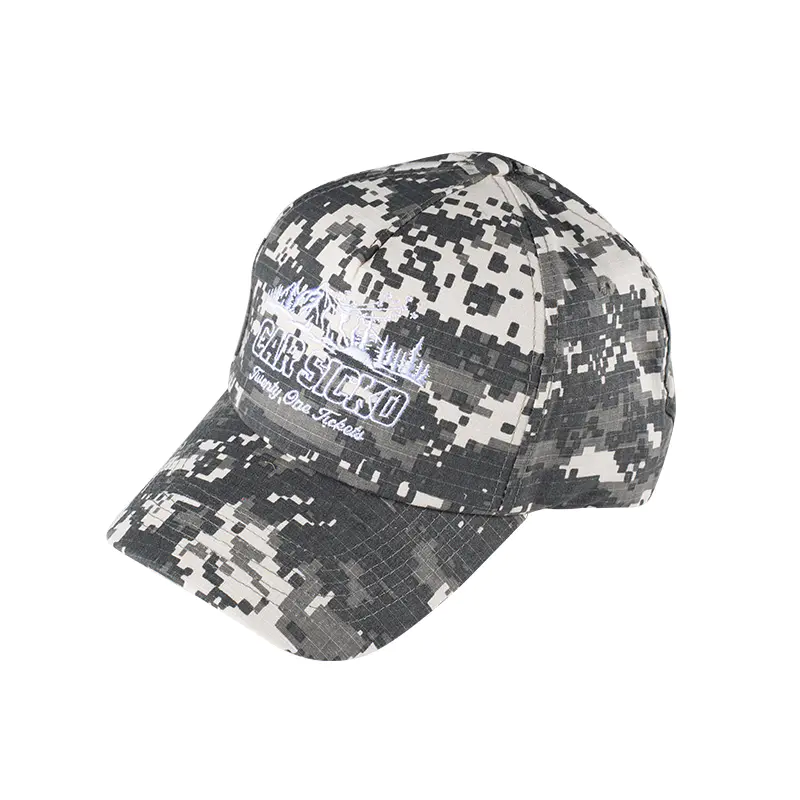
The front panels create another important point of difference. Structured baseball caps usually include an internal reinforcement layer that helps the crown maintain its shape. Buckram is commonly used for this purpose, while foam-based materials can create a different combination of firmness and surface feel. The choice becomes more noticeable when embroidery or other decoration is applied to the front. Dense stitching places repeated tension on the fabric, so insufficient support can result in puckering or distortion around detailed lettering and logos.
Panel construction also affects how printed patterns appear across the finished cap. A camouflage design, for example, does not necessarily continue across every panel in exactly the same visual position. Cutting direction, panel placement, fabric pattern repeat, and printing consistency all influence the final appearance. For bulk orders, reviewing an actual assembled sample is therefore more informative than checking the printed fabric alone. It shows whether the pattern behaves as expected after the material has been cut and sewn into the crown.
The brim introduces another area where construction choices become visible during use. A firm brim can preserve its curve more consistently, while a softer construction creates a more relaxed profile. The relationship between the brim, crown, and front reinforcement also affects how the cap sits when the rear strap is tightened. If the adjustment range is large, the crown should still maintain a reasonably balanced shape rather than pulling the front panels inward.
Fabric weight and finishing can further influence everyday handling. Lightweight woven fabrics tend to create a softer, more flexible cap, while heavier materials can provide additional structure. Neither approach works independently of the pattern, reinforcement, and closure because the finished cap is the result of all these components working together.
For buyers comparing samples, checking the closure after repeated adjustment, examining the front panel around dense embroidery, and looking at how printed patterns align across assembled panels can reveal construction differences that are difficult to identify from product photographs alone. These practical checks provide a clearer understanding of how an Adjustable Baseball Cap is likely to behave beyond the initial sample inspection.