
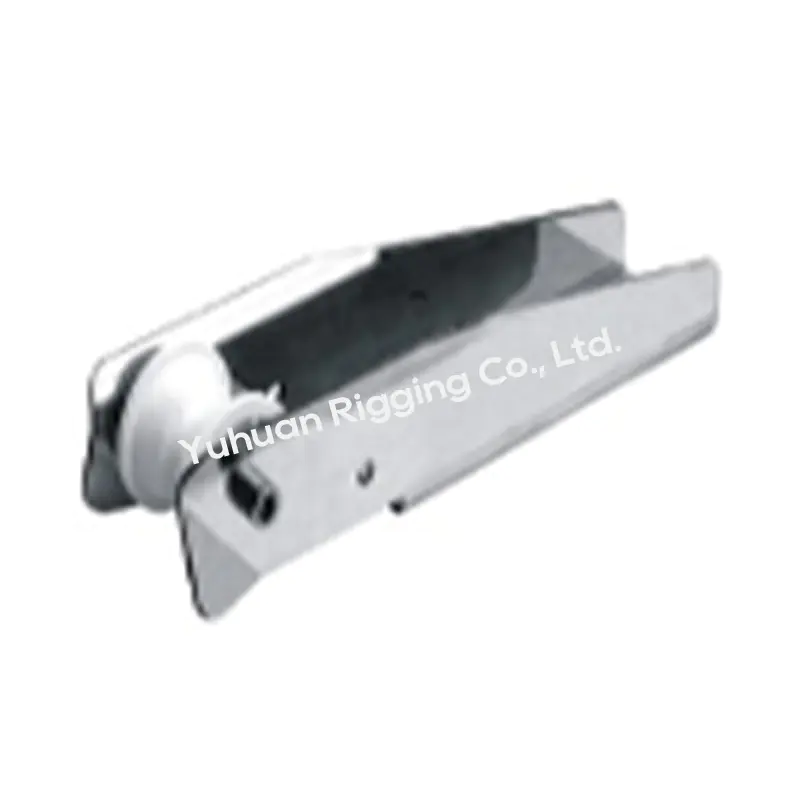
Marine equipment is often made up of many small components that need to function together. A boarding ladder requires suitable mounting points, a handrail needs to correspond with the surrounding structure, and a holder must fit the available space without interfering with nearby equipment. For Marine Hardware Accessories, this relationship between individual components is an important part of product selection and boat layout.
Marine hardware can cover a wide range of functions, including access, support, storage, deck organization, and recreational use. Rails, ladders, hinges, brackets, holders, fasteners, and fittings may all be installed within the same boat. Their dimensions and connection methods therefore need to be considered alongside the surrounding structure rather than separately.
Compatibility is particularly relevant when several components are sourced for one project. Two parts can meet their individual dimensional requirements but still be difficult to install if their mounting patterns, tube diameters, connection methods, or required clearances do not match. Standardized dimensions can make it easier to coordinate related components and can also simplify replacement when a boat is modified or repaired later.
Material selection depends heavily on the application. Marine hardware can encounter moisture, saltwater, mechanical loads, temperature changes, and repeated handling. Stainless steel and marine-grade aluminum are commonly used for different types of components, but the appropriate material depends on the part's function, weight requirements, structural demands, and installation environment.
Surface finishing can also influence both appearance and application. Polishing, anodizing, and other treatments may be selected according to the base material and the intended use. Visible deck hardware, for example, may require different finishing considerations from components positioned in less exposed areas.
Product families can also make sourcing more flexible. A boat project may require several types of deck fittings, holders, access components, or fabricated metal parts. When related products share similar materials, dimensions, tubing, or connection methods, it becomes easier to coordinate specifications across the project.
Customization does not always require developing a completely new component. Changes to dimensions, tube configurations, mounting structures, or surface finishes may allow an existing design to fit a particular boat layout. This can be especially useful when available installation space differs between boat models.
The manufacturing process also connects individual marine components. Tube cutting, bending, welding, polishing, and assembly all contribute to the dimensions and fit of the finished parts. When several components use similar materials or manufacturing processes, maintaining consistent dimensions becomes important for the overall installation.
For Marine Hardware Accessories, the practical consideration is therefore not simply what each component does on its own. Dimensions, materials, mounting methods, finishing, and manufacturing processes all affect how separate parts work together. Viewing marine hardware as a coordinated system can provide a clearer way to plan equipment for different boat layouts, repair work, and customized marine projects.