
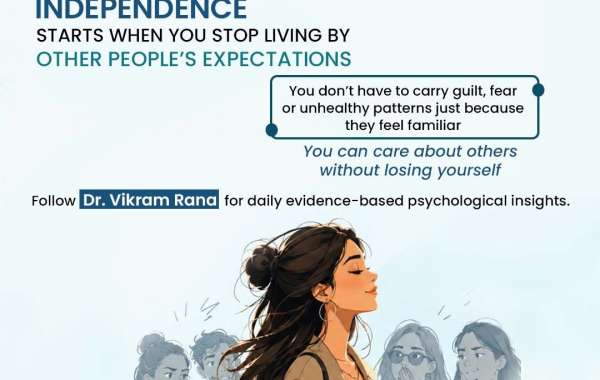
Emotional independence is often misunderstood as becoming detached, avoiding relationships, or handling everything alone. In reality, it means developing the ability to understand, regulate, and take responsibility for your emotions without allowing external validation, social expectations, or unhealthy relationship patterns to control your sense of self.
For many people, emotional dependence develops quietly. We may learn to seek approval, suppress difficult feelings, fear rejection, or prioritise other people’s needs at the expense of our own. Over time, these behaviours can become familiar patterns that feel difficult to change.
Emotional independence is not about caring less. It is about becoming secure enough to care without losing yourself.
Understanding Emotional Dependence
Emotional dependence can occur when our emotional stability becomes heavily dependent on another person’s attention, approval, behaviour, or presence.
You might constantly wonder:
- “Are they upset with me?”
- “What if they leave?”
- “Do they still value me?”
- “Should I change myself to keep them happy?”
Occasional concerns like these are normal. The problem arises when they consistently determine how you feel about yourself.
Emotional dependence can develop in romantic relationships, friendships, families, and even professional environments. It may also be reinforced by experiences where emotional needs were dismissed or where acceptance felt conditional.
Recognising the pattern is the first step toward changing it.
How Stigma Shapes Emotional Behaviour
Social and cultural expectations can make emotional independence difficult.
Many people grow up hearing messages such as:
“Don’t be too sensitive.”
“A strong person doesn’t cry.”
“Family comes first, no matter what.”
“You should adjust.”
“What will people think?”
Although such messages may sometimes be intended to encourage resilience or social harmony, they can also teach people to ignore their own emotional boundaries.
Someone may tolerate disrespect because setting boundaries is labelled selfish. Another person may hide anxiety because asking for support is perceived as weakness.
Over time, suppressing emotions does not necessarily make them disappear. Instead, they may emerge through resentment, irritability, withdrawal, anxiety, or unhealthy relationship patterns.
Emotional independence begins when we stop measuring our emotional needs solely against other people’s expectations.
Recognising Toxic Patterns
Toxic patterns are not always obvious. They can become normalised when they develop gradually.
Some common patterns include:
People-pleasing: Constantly prioritising others to avoid conflict or rejection.
Emotional manipulation: Feeling responsible for another person’s emotions or being pressured through guilt.
Poor boundaries: Saying yes when you genuinely want to say no.
Over-explaining: Feeling that every decision needs to be justified to others.
Fear of abandonment: Remaining in unhealthy situations because being alone feels unbearable.
Self-silencing: Avoiding honest communication to maintain peace.
The presence of one of these behaviours does not automatically mean a relationship is toxic. Context matters. What matters is recognising repeated patterns that undermine your wellbeing, autonomy, or self-respect.
What Emotional Independence Actually Looks Like
Emotional independence does not mean never needing anyone.
Healthy relationships involve support, connection, vulnerability, and interdependence. The goal is not isolation — it is healthy interdependence.
An emotionally independent person can say:
“I value your opinion, but I can make my own decision.”
“I understand that you’re disappointed, but I am not responsible for managing your emotions.”
“I care about you, and I still need this boundary.”
“I can be alone without believing that I am unwanted.”
These statements reflect emotional ownership rather than emotional disconnection.
Building Emotional Independence
Developing emotional independence takes practice rather than one dramatic decision.
1. Identify Your Emotional Triggers
Notice situations that create intense fear, guilt, anger, or insecurity. Ask yourself what the situation means to you and whether the reaction connects to an older pattern.
2. Separate Feelings From Facts
Feeling rejected does not always mean you have been rejected. Feeling guilty does not automatically mean you have done something wrong.
Learning to pause between an emotion and a conclusion creates space for clearer thinking.
3. Practise Healthy Boundaries
Start with small boundaries. You do not need to justify every boundary extensively.
A simple “I won’t be able to do that” can sometimes be enough.
4. Build Self-Trust
Make small decisions based on your own values and follow through. Self-trust grows when you repeatedly demonstrate to yourself that your needs, judgment, and feelings deserve consideration.
5. Develop a Life Beyond One Relationship
Maintain friendships, interests, routines, goals, and activities that belong to you. A healthy relationship should complement your identity, not become your entire identity.
6. Learn to Tolerate Discomfort
Setting boundaries may initially create guilt. Choosing yourself may feel unfamiliar. Emotional independence involves learning that temporary discomfort does not necessarily mean you have made the wrong decision.
Liberation Is Not About Becoming Hard
Emotional independence is sometimes mistaken for becoming emotionally tough or unaffected.
But true independence allows vulnerability.
You can ask for help without becoming dependent.
You can love deeply without abandoning yourself.
You can accept criticism without allowing it to define you.
You can experience rejection without believing you are unworthy.
The goal is not to eliminate emotional needs. It is to develop enough inner stability that those needs do not dictate every decision you make.
Breaking free from stigma and toxic patterns is ultimately an act of self-awareness. It requires questioning old beliefs, recognising unhealthy dynamics, establishing boundaries, and developing a healthier relationship with your own emotions.
Emotional independence does not mean standing alone.
It means knowing that you can stand on your own — and still choose meaningful connection.
Follow Dr. Vikram Rana for daily evidence-based psychological insights.