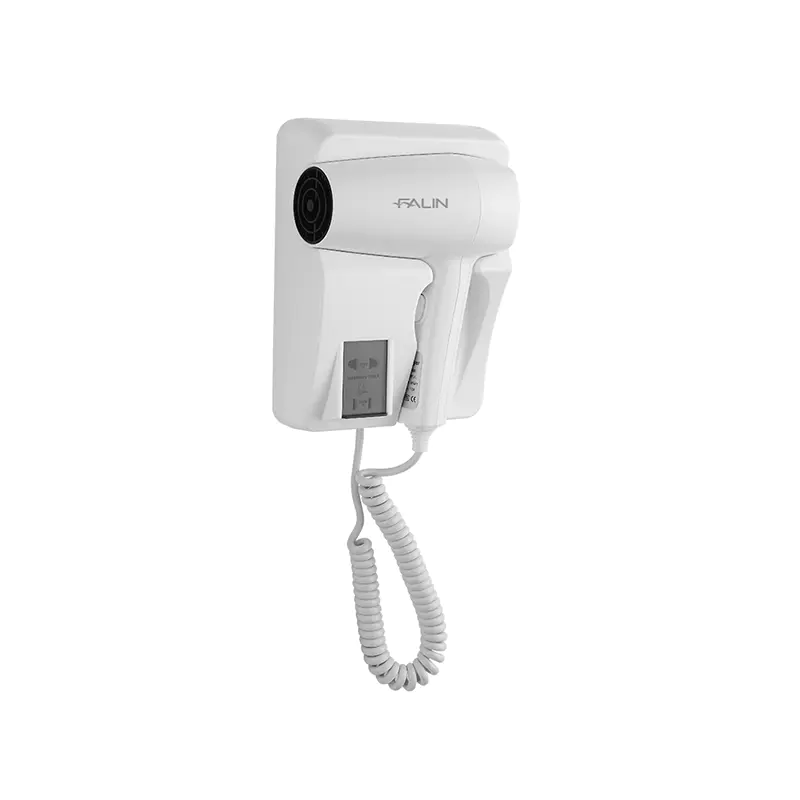
A hair dryer in a hotel bathroom or gym changing room serves a different purpose from one kept in a home drawer. In shared facilities, users expect to find the appliance in a predictable location without searching through storage areas or moving other items. A Wall Mounted High Speed Hair Dryer combines a fixed installation point with directed airflow, making the surrounding layout an important part of its everyday use.
Mounting the appliance on a wall can free up counter space and reduce the need to store and retrieve it between uses. This can be particularly useful in compact bathrooms, locker rooms, and grooming areas where several functions compete for limited space. However, the installation needs to be planned around the people who will use it. Mounting height, reach distance, cable arrangement, and the position of the air outlet all affect whether the dryer feels convenient rather than awkward.
Airflow performance is another consideration, especially in facilities where people may need to dry their hair quickly before leaving. Motor power can provide a useful specification for comparison, but it does not tell the whole story. Air outlet design, airflow direction, heat control, and the appliance's overall construction also influence the drying experience. A higher power rating should therefore be considered alongside other operating characteristics rather than treated as a complete measure of performance.
Noise can become more noticeable when a dryer is installed in a hotel room, apartment-style accommodation, or another quiet environment. High-speed airflow and sound levels need to be considered together. In a busy gym, brief periods of operating noise may be less disruptive than in a small hotel bathroom connected directly to a sleeping area. The location and frequency of use can influence which configuration is most suitable.
Fixed installation also brings attention to mounting stability and electrical safety. The bracket or mounting structure must be appropriate for the unit, while the installation should follow the manufacturer's instructions. Overheat protection and automatic shutoff functions may be relevant features, but their presence does not replace correct installation, routine inspection, or appropriate electrical arrangements.
Maintenance is easier to plan when the dryer remains in a designated position. Staff can inspect the housing, clean accessible surfaces, check the mounting structure, and follow the recommended maintenance schedule without first locating a portable appliance. In high-use environments, these routine checks help facilities identify wear or operating changes before they cause greater disruption.
Ultimately, a wall-mounted dryer is part of the room's functional design. Space availability, user access, airflow, noise, and maintenance requirements should be considered together. When these factors are matched to the installation environment, the equipment can serve its intended purpose without creating unnecessary obstacles in a shared bathroom or grooming area.