Word puzzles are an enjoyable way to challenge the mind, improve vocabulary, and develop logical thinking. Among the many types of word games available, codewords offer a distinctive experience because they combine the excitement of decoding with the satisfaction of discovering hidden words. Although these puzzles may appear confusing at first, understanding a few basic techniques can make them much easier to solve. With the right approach, codeword help can guide beginners and experienced puzzle enthusiasts toward more efficient and enjoyable solving sessions.
Understanding How Codeword Puzzles Work
A codeword puzzle is a word game in which every letter of the alphabet is represented by a number. Instead of receiving ordinary clues for each answer, players must use the numbered grid to identify the letters that form the hidden words. Each number consistently represents the same letter throughout the puzzle, so discovering one letter can help solve several other words.
For example, if the number 7 represents the letter A in one part of the grid, every other occurrence of the number 7 must also represent A. This consistency creates opportunities to recognize patterns and uncover additional letters as the puzzle progresses.
Unlike traditional crosswords, codewords do not always provide direct definitions or descriptive clues. Players must rely on letter patterns, word length, familiar combinations, and the relationships between intersecting words. This makes the puzzle both a vocabulary exercise and a test of deduction.
Learning these basic rules is the first step toward solving codewords confidently. Once players understand how the number-to-letter system works, the puzzle becomes less intimidating and more like a series of small, manageable challenges.
Why Codeword Help Can Make a Difference
Even people with strong vocabularies sometimes struggle with codeword puzzles. A grid may contain unfamiliar words, unusual letter combinations, or several possible answers that appear equally reasonable. When progress slows, codeword help can provide useful guidance without taking away the enjoyment of solving the puzzle independently.
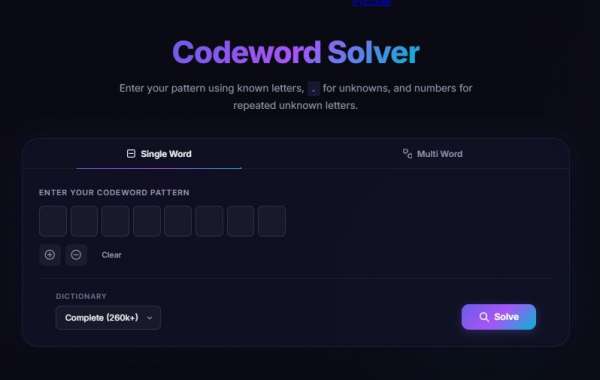
Helpful resources may explain common solving techniques, demonstrate how to identify likely letters, or offer hints for particularly difficult sections. Some tools also allow players to enter known letters and search for words that match the available pattern.
The most useful assistance does more than provide an answer. It explains why a particular letter or word is likely to fit. Understanding the reasoning behind a solution helps players recognize similar patterns in future puzzles.
For beginners, this learning process is especially valuable. Instead of guessing randomly, they can gradually develop a structured method for approaching unfamiliar grids. Experienced players can also benefit by discovering alternative strategies or learning how to reduce the time spent on difficult sections.
Start With the Most Familiar Words
One of the simplest ways to begin a codeword puzzle is to look for short words and familiar patterns. Two-letter and three-letter words are often easier to identify because the number of possible combinations is relatively limited.
For instance, a two-letter word containing a repeated number must represent a word with the same letter twice. Depending on the puzzle's language and vocabulary, this pattern may suggest words such as “oo” in a longer word context, although ordinary standalone possibilities are more limited. A two-letter word with different numbers could represent common combinations such as “to,” “in,” “is,” or “of.”
Three-letter words provide more opportunities. Patterns with repeated letters, such as A-B-A, can suggest words like “eye” or “did,” depending on the surrounding context. The goal is not to assume that a familiar word must be correct, but to identify possibilities that can be tested against the rest of the grid.
As letters become available, longer words also become easier to recognize. A pattern such as C-A-T immediately suggests “cat,” while a partial pattern like S-T-R-A may point toward several longer words. Each confirmed letter narrows the possibilities.
Starting with familiar patterns establishes a foundation for solving the rest of the puzzle.
Use Letter Frequency to Identify Likely Answers
Letter frequency is another useful technique for codeword solving. In English, certain letters appear more frequently than others. E is particularly common, while T, A, O, I, N, S, H, and R also occur regularly.
When a puzzle contains many numbered positions, players can count how often each number appears. A number repeated throughout the grid may represent a frequent letter, making E or another common letter a reasonable possibility.
However, frequency should be treated as a clue rather than a guaranteed answer. A particular puzzle may contain unusual vocabulary, specialized terminology, or a passage in which less common letters appear more frequently than expected.
The best approach is to combine frequency analysis with word patterns. If one number appears repeatedly and assigning it to E creates several plausible words, the theory becomes stronger. If the resulting words make little sense, it may be better to reconsider the assumption.
This process of forming a hypothesis and testing it is one of the most important skills in codeword puzzles. It encourages careful reasoning and reduces dependence on random guesses.
Pay Attention to Common Letter Combinations
English contains many recurring letter combinations that can help reveal hidden words. Recognizing these patterns allows players to make educated deductions even when only a few letters are known.
Common combinations include TH, CH, SH, ST, TR, and PR. Endings such as -ING, -ED, -ER, -LY, and -TION are also useful when the word length and available letters support them.
Suppose a five-letter word contains the pattern _ I N G _. The ending might suggest a familiar construction, but the missing letters must still be evaluated against the actual word and the surrounding grid. Similarly, a word ending in two repeated numbers could contain a repeated-letter ending such as LL or SS.
These patterns are particularly helpful when solving longer words because they reduce the number of possible combinations. Instead of considering every word that fits the available spaces, players can focus on candidates that match familiar English structures.
A reliable codeword help strategy combines these patterns with the puzzle's existing letter assignments. Every possible answer should agree with the numbers already identified elsewhere in the grid.
Work Across the Entire Grid
A common mistake is concentrating on a single difficult word for too long. Codeword puzzles are interconnected, and a letter discovered in one section may unlock several other sections.
When a word seems impossible to solve, move to another part of the grid. Look for shorter words, repeated patterns, or familiar endings. Once a few additional letters are identified, return to the original word and see whether the possibilities have changed.
This approach prevents frustration and makes better use of the available clues. It also helps reveal relationships that may not be obvious when examining only one word at a time.
Players can improve their efficiency by keeping track of confirmed letters and uncertain guesses. A confirmed assignment should be supported by convincing evidence, while a tentative possibility should remain open to revision. Treating every guess as final can create a chain of incorrect answers that becomes difficult to untangle.
Moving between different sections of the puzzle encourages a broader perspective and often produces faster progress than repeatedly examining the same unresolved word.
Use Online Codeword Tools Wisely
Online resources can provide additional support when a puzzle becomes particularly challenging. Depending on the available tool, players may be able to enter a letter pattern, search for matching words, or receive suggestions based on known positions.
For example, a word pattern such as C _ _ E could match several English words, including “cake,” “care,” or “code,” depending on the puzzle's length and context. A solver can compare these possibilities with the other numbered positions to determine which candidate fits best.
Digital tools are especially useful when a player has reached a point where several possible answers remain. They can help narrow the search and reveal vocabulary that might not come to mind immediately.
Nevertheless, online assistance should support the solving process rather than replace it completely. Entering a full puzzle into a solver and copying every answer may finish the grid quickly, but it offers fewer opportunities to learn useful techniques.
A balanced approach is to solve as much as possible independently, request a hint when progress stops, and use a complete solution only when necessary. This method preserves the challenge while making assistance available when it is genuinely needed.
Avoid Common Codeword Mistakes
Several habits can make codeword puzzles more difficult than they need to be. One frequent mistake is assigning letters based on a single possible word without checking the rest of the grid. Although the word may initially appear correct, the assignment could produce impossible combinations elsewhere.
Another mistake is ignoring the distinction between confirmed letters and tentative guesses. Keeping a clear record of uncertain assignments makes it easier to correct errors before they affect the entire puzzle.
Players should also avoid forcing an unfamiliar word into a pattern simply because it seems to fit. Sometimes the problem is not a lack of vocabulary but an earlier incorrect assumption. Revisiting questionable letters can reveal the source of the difficulty.
Finally, rushing can lead to avoidable mistakes. Taking time to verify each important deduction is often more efficient than filling the grid quickly and correcting multiple errors later.
The objective is not merely to complete the puzzle but to solve it accurately while enjoying the reasoning process.
Build Your Skills Through Regular Practice
Like many mental activities, codeword solving becomes easier with practice. Beginners can start with simple puzzles containing common vocabulary and gradually move toward grids with longer words and less familiar patterns.
After completing each puzzle, consider which techniques were most helpful. Perhaps a short word revealed several letters, or recognizing a common ending unlocked a difficult section. Reflecting on these discoveries helps turn individual solutions into reusable skills.
It can also be useful to revisit a completed puzzle and examine the reasoning behind the answers. Understanding why a particular letter assignment worked makes it easier to recognize the same pattern in a different grid.
Regular practice may strengthen vocabulary recognition, attention to detail, and logical reasoning. The experience can also provide a relaxing break from everyday responsibilities, especially when puzzles are approached at a comfortable pace.
There is no need to solve every grid quickly. Consistent progress and a willingness to learn from mistakes are more valuable than speed alone.
Conclusion
Codeword puzzles combine vocabulary, pattern recognition, and logical deduction in a format that can be both challenging and rewarding. By starting with familiar words, studying letter frequency, recognizing common combinations, and using information from across the grid, players can improve their solving ability over time.
Effective codeword help offers guidance when a puzzle becomes difficult while preserving the opportunity to think independently. Online solvers, word-pattern tools, and practical strategy guides can all contribute to a better experience when used thoughtfully.
Whether you are solving your first grid or working through increasingly complex puzzles, a systematic approach can make a noticeable difference. Focus on confirmed patterns, remain flexible when testing possibilities, and treat every completed puzzle as an opportunity to improve. With patience and regular practice, codeword solving can become a more enjoyable and manageable part of your daily routine.