
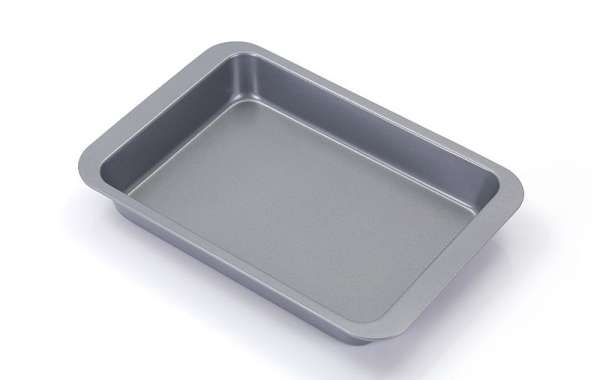
A French Fry Baking Tray needs to fit the available oven space before other design features become useful. Length, width, and height determine whether the tray can slide onto the rack, sit level, and leave enough clearance around the heating element. Compact appliances often have narrower interiors and shorter distances between the rack and the upper heating element, making accurate measurements especially important.
Tray dimensions also affect how much food can be prepared in one batch. A larger surface can accommodate more fries, but filling it too densely may reduce the space available for hot air to circulate. For household cooking, the useful capacity depends not only on the tray's overall size but also on how much of its surface can be used without overcrowding.
Airflow is another important consideration. A solid sheet pan can retain moisture beneath the potatoes, while a perforated surface allows more air to reach their undersides and gives oil a route to drain away. The opening size needs to suit the fries being cooked. Large openings may not support thin cuts, whereas very small openings can collect starch and grease during repeated use.
The spacing between fries still matters, even with a perforated design. When pieces overlap, steam becomes trapped between them and browning may become uneven. Spreading fries across the available cooking area generally produces more consistent results than piling them into the centre.
Rim height affects both handling and air circulation. A raised edge helps prevent fries from sliding off when the tray is moved, but an excessively tall rim can obstruct airflow across the food. A moderate edge can offer practical support without enclosing too much of the cooking surface. If oil drains through the tray, a separate sheet pan underneath can catch drips and reduce residue inside the oven.
Material and surface finish also influence routine use. Metal trays transfer heat to the food, while surface coatings may make baked-on oil and starch easier to remove. Cleaning instructions should match the actual coating and construction, particularly when dishwasher use is being considered. The tray should also fit comfortably in the sink or cleaning area.
For commercial kitchens, compatibility with existing racks and storage systems can be just as important as cooking performance. Trays with consistent dimensions are easier to stack, move between workstations, and replace when needed. In household retail, clear measurements help customers compare a French Fry Baking Tray with their own appliances before ordering.
A practical tray selection therefore involves several connected factors: interior clearance, usable cooking area, perforation design, rim height, and cleaning requirements. Considering these details together helps match the tray to its intended cooking environment rather than relying on appearance or nominal size alone.