
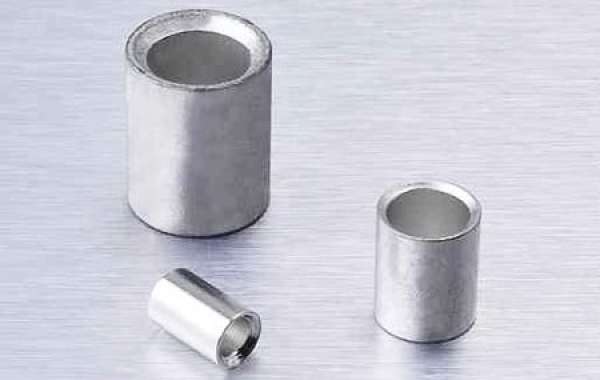
The barrel is the central part of a Butt Splice Connector. It holds the stripped ends of two wires and deforms under pressure from a crimping tool to secure the conductors. Barrel construction affects how the metal responds to compression, making it an important consideration when selecting a connector for a particular wire size and application.
Some barrels are formed by rolling a flat strip of metal into a tube, leaving a longitudinal seam. Others use seamless construction, which provides a continuous wall around the barrel. A properly formed seamed barrel can perform effectively when paired with the specified tooling, while a seamless design may be preferred where uniform wall construction is important. The choice depends on the connector's design requirements, conductor range, and intended installation method.
Copper is commonly used for the conductive barrel because of its electrical conductivity and ability to deform during crimping. Surface plating can provide additional protection against oxidation and environmental exposure. Tin plating is widely used for general electrical connections, while other finishes may be selected for particular operating conditions. For automotive, marine, and outdoor applications, buyers should consider the plating specification alongside the insulation and environmental requirements rather than treating all copper connectors as interchangeable.
Barrel length influences both wire preparation and installation space. A longer barrel provides more area for conductor engagement, while a shorter design may be more practical in confined wiring assemblies. Installers need to strip each wire to the length specified for the connector so that the conductor reaches the intended position without leaving excessive exposed wire. Incorrect strip length can affect the crimped joint even when the connector and tool are otherwise suitable.
Insulation determines how the metal barrel is covered and protected. PVC and nylon-insulated models serve different general wiring needs, while heat-shrink versions can provide an additional layer of environmental protection when installed according to their specifications. Non-insulated connectors allow installers to apply separate sleeving where required. The insulation material, temperature rating, and sealing characteristics should match the conditions in which the connection will operate.
Tool compatibility is equally important. A crimping die must suit the connector's barrel dimensions and the conductor range. Using a mismatched tool can lead to insufficient or excessive compression, so the connector and crimping equipment should be evaluated as a combination. Trial crimping and appropriate inspection can help confirm that the assembly meets the applicable requirements.
When comparing a Butt Splice Connector, buyers should review barrel construction, plating, length, supported wire sizes, insulation type, and tooling requirements together. These details help determine whether a connector suits the installation environment and can be fitted consistently across an electrical assembly.