
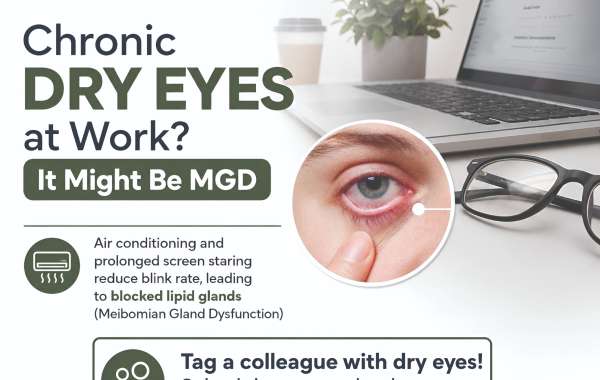
For many of us, work means spending hours looking at computer screens, phones, documents and other close-up tasks. While digital devices are now an essential part of everyday life, prolonged visual concentration can leave your eyes feeling tired, dry or uncomfortable.
The good news is that protecting your eyes at work does not always require major changes. Small, consistent habits can make a meaningful difference to everyday eye comfort and help you maintain healthier visual habits.
1. Follow the 20–20–20 Rule
One of the simplest habits for people who spend long hours on screens is the 20–20–20 rule.
Every 20 minutes, look at something around 20 feet away for at least 20 seconds.
When you focus on a screen for extended periods, your eyes continuously work at a fixed near distance. Looking farther away gives your focusing system a regular change of distance.
Set a reminder if you often get absorbed in work and forget to take breaks.
2. Remember to Blink
When concentrating on a screen, people often blink less frequently. Reduced blinking can contribute to dryness and irritation, particularly in air-conditioned offices.
Make a conscious effort to blink regularly while working.
If your eyes frequently feel dry, gritty, burning or uncomfortable, do not simply ignore the symptoms. Persistent dryness may require an eye examination to understand the underlying cause and appropriate treatment.
3. Position Your Screen Correctly
Your workstation setup can influence visual comfort.
Ideally, keep your monitor at a comfortable viewing distance and position it so that you are looking slightly downward rather than constantly looking upward.
Avoid placing the screen where strong light creates distracting reflections or glare.
Simple adjustments to monitor position, brightness and surrounding lighting can make prolonged screen work more comfortable.
4. Avoid Working in Poor Lighting
A bright screen in a dark room — or a poorly lit workspace with excessive glare — can make visual tasks uncomfortable.
Try to maintain balanced lighting around your workstation.
Natural light can be useful, but direct sunlight falling onto your screen can create glare. Adjust blinds, curtains or your workstation position when necessary.
The goal is not simply to make the room brighter. It is to create comfortable, even illumination without excessive reflections.
5. Give Your Eyes More Than Screen Breaks
Eye-friendly habits are not limited to what you do during working hours.
Whenever possible, step away from your desk during longer breaks. Look into the distance, move around and give yourself time away from continuous near work.
For children and young adults in particular, balancing prolonged near work with regular outdoor time is an important part of healthy visual habits.
6. Keep Your Screen and Workspace Clean
Dust, fingerprints and smudges on screens can reduce visual clarity and encourage unnecessary squinting or visual effort.
Keep your monitor clean and make sure your glasses, if you wear them, are also properly cleaned.
Small environmental factors can have a surprisingly noticeable effect on everyday comfort.
7. Do Not Ignore Persistent Symptoms
Occasional eye tiredness after a long workday may be common. However, persistent or recurring symptoms should not automatically be blamed on screen use.
Pay attention to symptoms such as:
- Frequent headaches
- Persistent eye strain
- Blurred or fluctuating vision
- Dryness or irritation
- Difficulty focusing
- Increasing sensitivity to light
- Double vision
- Eye pain or redness
If these symptoms continue or interfere with your work, an eye examination can help identify whether there is an underlying vision problem or another eye condition.
8. Keep Your Prescription Up to Date
An outdated spectacle prescription can make prolonged reading or screen work more uncomfortable.
If you regularly experience headaches, blurred vision or difficulty focusing despite taking breaks, your prescription may need to be reviewed.
Regular eye examinations are also important because some eye conditions can develop without obvious symptoms in their early stages.
9. Make Eye Health Part of Your Routine
Protecting your eyes at work is not about following one perfect rule. It is about developing simple habits that become part of your everyday routine.
Take regular visual breaks. Blink frequently. Maintain a comfortable workstation. Manage glare. Spend time away from screens. And seek professional advice when symptoms persist.
These actions may seem small, but consistency matters.
Your Eyes Work Hard. Give Them a Break.
Modern work requires sustained visual attention, but your eyes deserve the same care and attention you give to the rest of your health.
At Dr. Vaidya Eye Hospital, Andheri West, we believe that good eye care begins with awareness, healthy daily habits and timely eye examinations.
Small changes today can help you care for your vision for years to come.