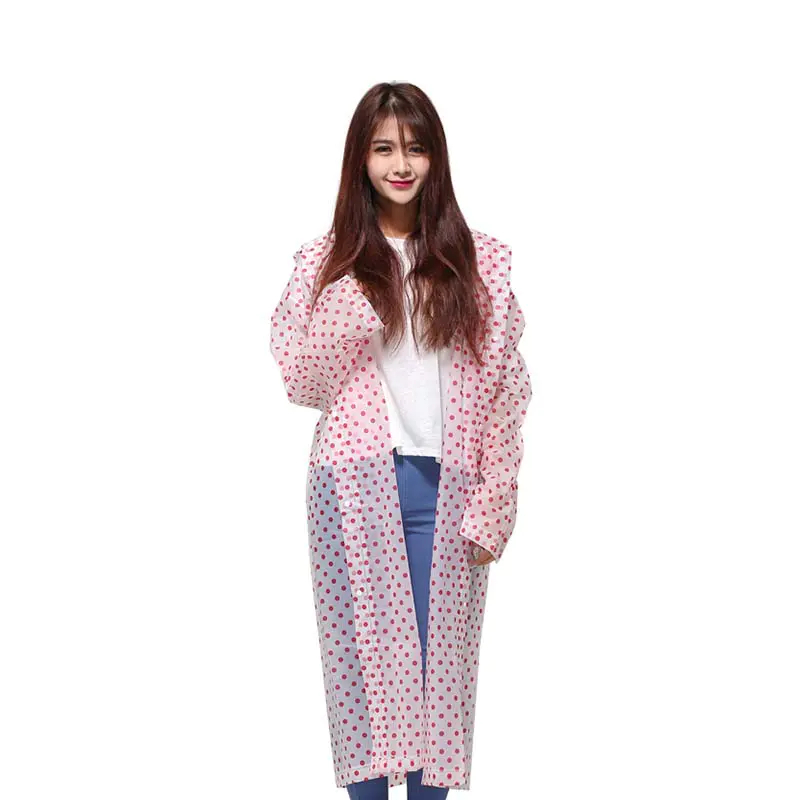
A Thin Film Raincoat is typically designed for occasional use, where low weight and compact storage are important parts of its function. Unlike structured outdoor jackets, thin-film styles generally rely on simple garment shapes and flexible materials that can be folded into a small package before use.
Material thickness affects how the raincoat feels, how much space it occupies, and how it handles during wear. Polyethylene is commonly used for disposable rainwear, while EVA and PEVA are also found in lightweight raincoat products. These materials differ in flexibility, thickness, and suitability for repeated use. Buyers should therefore consider the intended wearing conditions before comparing products based on weight alone. A garment for a brief walk between venues may have different requirements from one intended for longer outdoor activities.
Pattern design also affects practical coverage. Hood size, body length, width, and sleeve openings determine how the garment fits over everyday clothing. A loose, simple cut can make the raincoat easier to put on quickly, but it still needs enough coverage for the intended wearer. Increasing garment dimensions can improve coverage while also increasing material use and folded volume, so the design needs to reflect its expected application.
Packaging is particularly relevant when raincoats are distributed in large quantities. Individually wrapped garments can be stored in bags, vehicles, visitor centers, or event supply boxes until needed. Folded dimensions and carton quantities affect warehouse space and transport efficiency. For distributors, these details may be just as important as the garment's unfolded measurements, especially when products are supplied for festivals, tourism, school activities, or emergency preparedness.
Printing can add another practical dimension to bulk orders. Event names, simple graphics, and organizational branding can help identify raincoats distributed to particular groups. The artwork and printing method need to suit the film material and the planned production volume. Buyers should also confirm how printed garments will be folded and packed to avoid confusion during distribution.
Manufacturing consistency matters even for a relatively simple garment. Film thickness, cutting accuracy, seam or edge sealing, and folding can affect the finished product. Clear specifications help purchasing teams compare samples with bulk orders and establish expectations for dimensions, packaging, and appearance.
For B2B buyers, the most suitable lightweight raincoat depends on how it will be carried, distributed, and used. Material choice, coverage, print requirements, and packing arrangements should be assessed together. This makes it easier to select rainwear that meets the needs of its intended setting without adding unnecessary material or complexity.