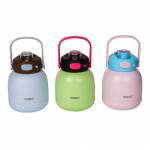
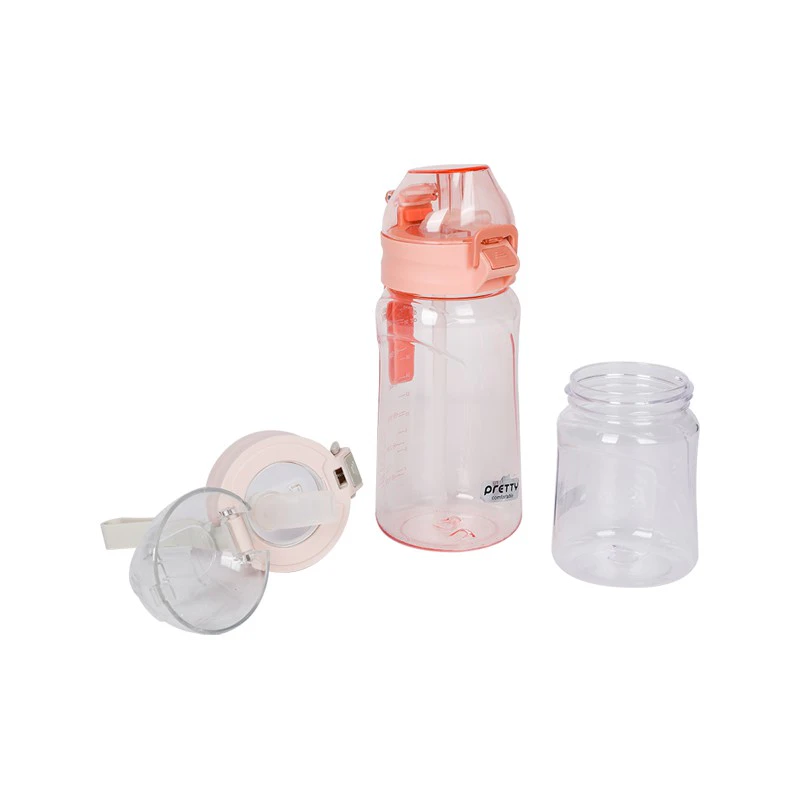
A Children Plastic Water Bottle is used in a range of everyday situations, from school and sports activities to family outings. Because children may drop their bottles, open and close the lids repeatedly, or leave them inside a backpack, practical details often matter more than appearance alone. Material, construction, and ease of cleaning should be considered together when evaluating different designs.
Plastic type is one of the first points to review. Tritan copolyester, polypropylene, and high-density polyethylene have different characteristics in terms of transparency, flexibility, and resistance to everyday use. The appropriate choice depends on the intended bottle design and its manufacturing specifications. Buyers should also verify that the material is suitable for food contact and that the finished product complies with applicable requirements. No single resin automatically determines the safety of the entire bottle.
Wall thickness and overall shape influence durability. The base and lower corners may receive repeated impacts when a bottle falls onto a hard surface. A design that accounts for these areas can help manage everyday knocks, although performance also depends on the resin, molding quality, and bottle geometry. Evaluating the finished product is more useful than comparing material names alone.
The lid deserves equal attention. Flip-top covers, drinking spouts, and silicone seals each have different cleaning and operating requirements. A lid should open and close conveniently for the intended age group, while its sealing components need to remain correctly positioned during regular use. Buyers can assess leakage performance through appropriate testing rather than relying solely on a product description.
Cleaning access is another practical consideration. A wide opening can make it easier to reach the interior with a bottle brush and inspect the bottom and corners. Removable lids and drinking components may also simplify cleaning, provided they can be reassembled correctly. Allowing the bottle and its components to dry thoroughly between uses helps maintain routine hygiene.
Colors and graphics influence how children recognize and use their bottles. Molded-in colors and in-mold labeling offer different appearance and durability characteristics from surface-applied printing. The suitability of any decoration method depends on the materials and applicable food-contact requirements, especially where printed areas may be handled frequently.
For retailers and distributors, a Children Plastic Water Bottle should be compared through its material specification, impact performance, lid construction, cleaning access, decoration method, and intended age group. Considering these factors together gives buyers a clearer basis for evaluating designs for school, travel, and daily hydration.