
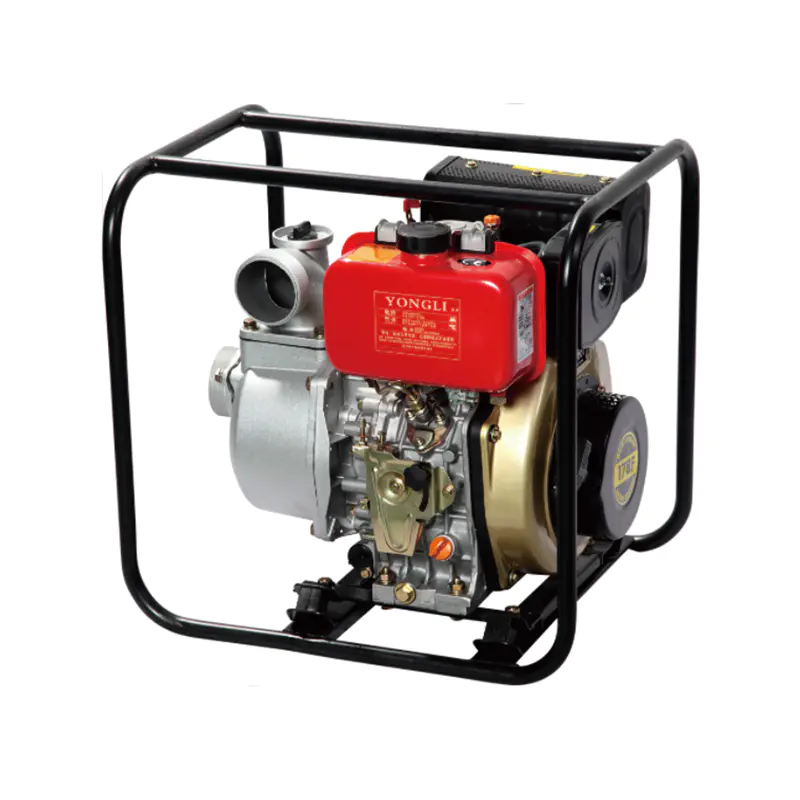
An 186F Diesel Water Pumpset combines a diesel engine with a large-capacity water pump for applications that require mobile water transfer. Its 4-inch inlet and outlet connections are designed for moving substantial volumes of water, making the configuration relevant to agricultural irrigation, construction drainage, and temporary water-removal work.
Flow rate and head are two important specifications when planning a pumping operation. This model lists a rated flow of 1,400 liters per minute and a maximum head of 26 meters. Flow rate indicates the volume of water the pump can move under specified conditions, while head describes its ability to overcome elevation and system resistance. These figures should not be treated as simultaneous guarantees under every installation condition. Hose diameter, pipe length, bends, elevation changes, and the water source all influence actual output.
The diesel engine provides another practical advantage. With an 186FA engine rated at 10 HP, the unit can operate in locations where grid electricity is unavailable or inconvenient to access. This can be useful for remote farmland, temporary construction sites, and drainage areas where equipment may need to be repositioned as conditions change. Its single-cylinder, air-cooled, four-stroke, direct-injection design is suited to engine-driven operation without requiring a separate electrical power supply.
Fuel capacity also affects daily planning. The listed standard tank holds 5.5 liters, while a larger tank of approximately 15 liters is available as a customization option. Actual operating time depends on engine load, speed, and fuel consumption, so tank size alone cannot determine how long the pump will run between refueling stops. For extended work, operators should plan fuel supplies around the expected workload and site access.
Irrigation and drainage place different demands on the same basic equipment. During irrigation, the pump transfers water from a pond, river, storage tank, or other source toward fields. The route and elevation determine whether the required flow can be maintained. During drainage, the priority may instead be removing accumulated water from excavations, low-lying farmland, or construction areas. In both cases, the intake position, hose arrangement, and water conditions influence performance.
Before operating an 186F Diesel Water Pumpset, users should confirm that the required flow and delivery height fit the installation, check the suction and discharge connections, and follow the engine and pump operating instructions. Water containing debris may require suitable intake screening, while long or restrictive pipe runs may reduce output.
For mobile water-transfer work, the combination of diesel power and 4-inch connections offers flexibility across several field applications. Matching the pump's actual operating conditions to the site's flow, elevation, and drainage requirements is more useful than relying on rated specifications alone.