
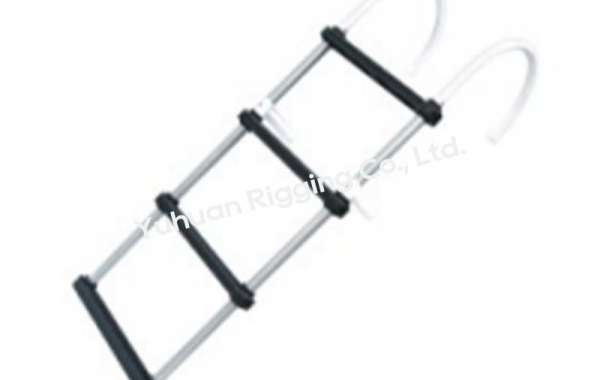
Climbing back onto a boat after swimming or spending time alongside the hull can be awkward when the ladder is too short or difficult to deploy. A Marine Aluminum Boarding Ladder needs to match both the boat's freeboard and the way its owner uses the vessel. Inflatable boats, small yachts, and pontoon boats have different layouts, so a ladder that works well on one craft may not be suitable for another.
Step count is a practical starting point. A boat with a low boarding point may need only two or three steps, while a higher transom can require a longer ladder. The important measurement is not simply the boat's overall size, but the vertical distance between the water and the point where the user steps aboard. The ladder should provide a manageable climbing distance without requiring the user to stretch awkwardly or reach for an unstable support.
Material choice matters in a marine environment. Aluminum is useful for boarding equipment because it combines relatively low weight with structural strength. This makes the ladder easier to handle when installing, removing, or storing it. Different aluminum alloys have different mechanical and finishing characteristics, so the grade should be appropriate for the intended load and construction. Anodizing adds a protective oxide layer that can improve resistance to corrosion and surface wear, although regular rinsing and inspection remain worthwhile in saltwater conditions.
Storage becomes another consideration on smaller boats. A folding design can reduce the space needed when the ladder is not in use, allowing it to fit in a locker or rest against a suitable mounting point. A removable model may be convenient for inflatable boats that are transported between trips. Before choosing a folding arrangement, it is worth checking how the ladder locks into its working position and whether the mounting method suits the boat's structure.
Step design also affects usability. Non-slip surfaces can help provide better footing when the ladder is wet, while adequate step width makes climbing more comfortable. The frame, joints, fasteners, and attachment points should be inspected periodically for looseness, deformation, wear, or corrosion. Even a lightweight ladder must be installed and used within its specified load limits.
For distributors serving several boat categories, keeping different ladder configurations can make it easier to match products to hull layouts. Comparing the required boarding height, available storage space, mounting arrangement, and intended use provides a clearer basis for selecting a suitable Marine Aluminum Boarding Ladder than choosing by appearance alone. These details also help maintain consistency when replacing an existing ladder or planning equipment for a new boat model.