
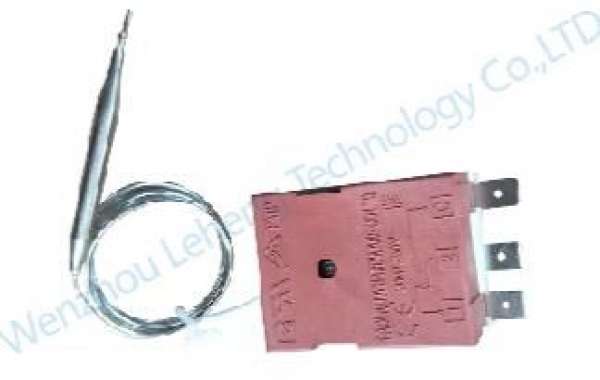
In commercial heating equipment, temperature adjustment is part of everyday operation. An operator may need to change the heat level when switching between products, processing conditions or working stages. A Adjustable Capillary Thermostat provides a mechanical way to select the working temperature and regulate the heating cycle around that setting.
Unlike a fixed-temperature switch, an adjustable thermostat has a user-operated control. The WHD-S model uses a knob and graduated dial panel, allowing the operator to select a setting within its specified range of 50°C to 300°C. The scale provides a visible reference rather than a digital temperature reading. This distinction matters when equipment is used repeatedly, because operators can return to a familiar dial position without treating the marking as a measurement of the actual temperature inside the machine.
The panel arrangement also affects how the control is used. The WHD-S is supplied with a black bakelite graduated dial panel and knob for installation on an equipment panel. Their position should be considered alongside the panel opening, shaft alignment and available space around nearby controls. The scale needs to remain visible from the normal operating position, while the knob should be accessible without interfering with other switches or handles.
A capillary thermostat also separates the sensing point from the adjustment mechanism. Its sensing bulb can be placed near the area where temperature needs to be monitored, while the switch body and knob remain at the front panel. The capillary tube connects these two parts, making it possible to arrange the user interface independently of the sensing location. During installation, the bulb position should reflect the temperature conditions relevant to the heating process. The capillary also needs a suitable route that avoids crushing or excessively sharp bends.
This arrangement can be used in different types of heating equipment. Commercial fryers, pizza ovens, soup kettles, waffle makers and honey heating tanks all involve different heating spaces and operating routines. Similar control requirements may appear in small drying ovens, incubators, oil baths and mold-heating equipment. The specific temperature setting and sensing position will depend on the machine rather than simply on the appliance category.
Electrical compatibility is another part of selecting a thermostat. The WHD-S has a listed rating of 20A at 250V. Equipment designers need to compare this rating with the heater's electrical requirements and confirm whether the intended circuit arrangement is appropriate. The thermostat's temperature range, mounting dimensions and sensing arrangement should also be reviewed together rather than treated as separate purchasing details.
It is equally important to distinguish normal temperature regulation from safety limiting. An adjustable thermostat manages the routine heating cycle around the operator's selected setting. A separate manual-reset limiter, when included in the equipment, serves as an additional protective device and requires manual resetting after activation. The two components therefore have different responsibilities.
When planning a heating appliance, the control knob, dial markings, panel installation, electrical rating and sensing position all contribute to how the temperature control works in practice. A Adjustable Capillary Thermostat brings these elements together in a mechanical arrangement that supports repeatable settings across different heating tasks.